Allergen and Cross-Contact Control in Halal Meat Plants Using Complex Ingredient Systems
Halal meat plants rarely process meat alone. Modern production depends on brines, marinades, spice systems, functional binders, tenderizing aids, smoke flavors, coating systems, and process-support ingredients. Each addition can improve eating quality and yield, but each one also expands the control burden for QA.
For halal processors, allergen control and halal integrity are linked. A formulation can be technically effective and still create risk if its carrier, processing aid, anti-caking agent, fermentation origin, or shared handling history is not documented clearly.
Amanah Catalytics works with halal meat processors that need enzyme solutions supported by practical documentation, plant-trial discipline, and change-control visibility. If you are evaluating a halal enzyme supplier for meat processing, the question is not only whether the enzyme performs. The question is whether it can be introduced, verified, and controlled inside your existing food safety and halal assurance system.
Why complex ingredient systems raise cross-contact risk
In meat processing, cross-contact is often introduced through the ingredient system rather than the main raw material. Common risk points include:
- Multi-component marinades with spice, flavor, sweetener, acidulant, and stabilizer blends
- Injection brines containing functional proteins, starches, gums, phosphates, or flavor carriers
- Tenderizing systems that combine enzymes with carriers or flow aids
- Coatings and glazes with wheat, milk, soy, sesame, or egg-derived components
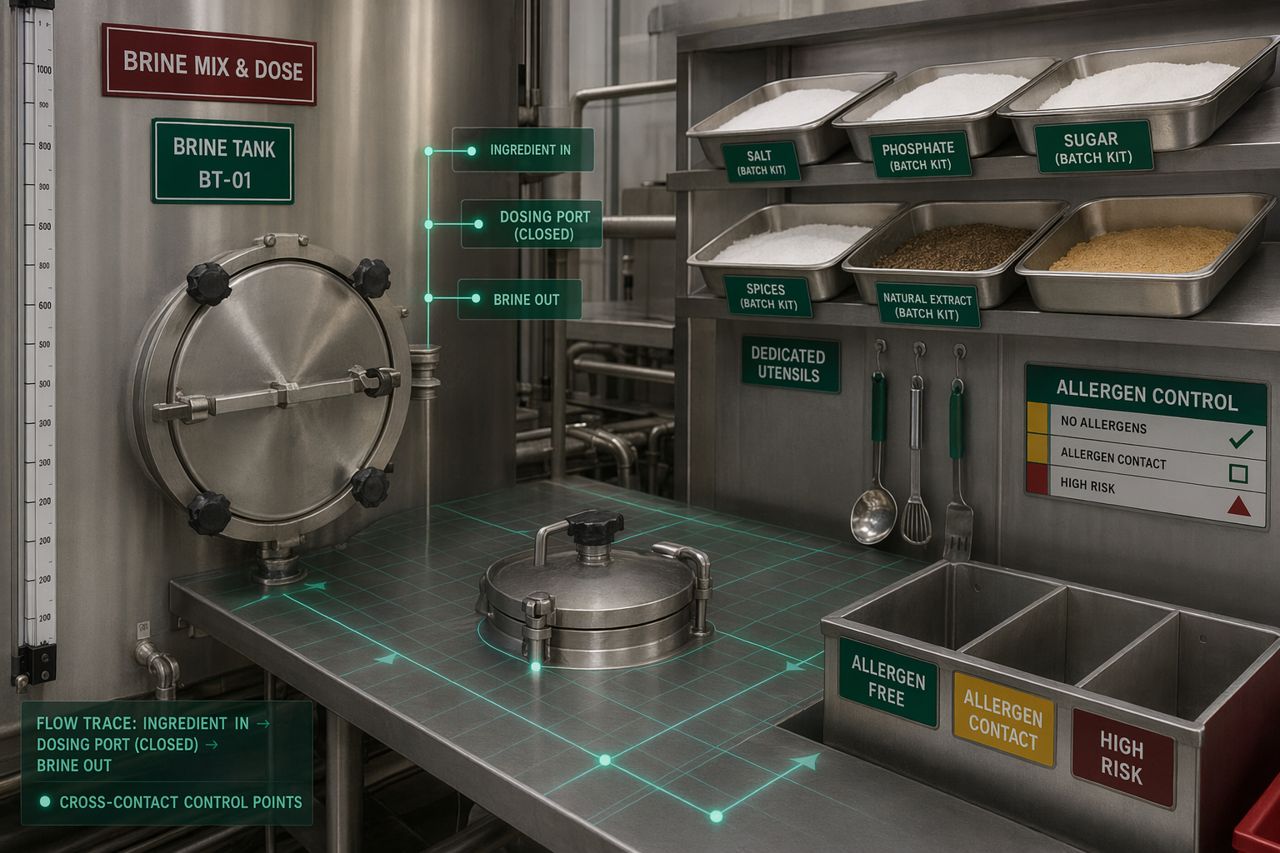
- Shared weighing rooms, scoops, tote liners, hoses, and dosing equipment
- Rework streams that carry undeclared allergen or halal status complexity
- Supplier formulation changes that are not communicated early enough to QA
For halal plants, the same pathways may also create concern around porcine derivatives, non-halal animal-derived materials, alcohol-based carriers, or unclear fermentation and processing aids. A good control program treats these as specification, supplier, and process-control issues—not as after-the-fact label corrections.
Enzyme ingredients need more than performance claims
Enzymes used in meat processing may support tenderness, texture consistency, protein functionality, marinade performance, or process efficiency. But for QA teams, the commercial value depends on whether the ingredient can be approved without creating avoidable compliance work.
When reviewing an enzyme ingredient, request documentation that answers practical plant questions:
- Is the product suitable for halal production, and is the certification current?
- Are animal-derived inputs absent or clearly declared?
- Are allergenic carriers, fermentation residues, or processing aids declared?
- Is the ingredient composition stable and supported by a formal specification?
- Is there a written change-notification commitment?
- Can the supplier support lot traceability and certificate review?
- Does the product fit the plant’s receiving, storage, dosing, and cleaning controls?
The goal is not to collect documents for a file alone. The goal is to prevent uncertainty from entering production.
Build controls around the full ingredient lifecycle
Allergen and cross-contact control is strongest when QA evaluates the ingredient from supplier approval through post-production verification.
1. Supplier qualification
Start with a structured questionnaire and document review. For enzyme systems, the supplier file should support halal suitability, allergen status, country and facility traceability where relevant, composition clarity, safety documentation, and change-control expectations.
Amanah Catalytics supports processors with documentation packages designed for technical review, not vague marketing summaries. This helps QA compare options, raise precise questions, and reduce approval delays.
2. Specification and label alignment
The specification should match how the ingredient is used in the plant. If an enzyme is supplied as part of a blend, the blend must be reviewed as a complete system, including carriers and minor components. Label and customer specification impacts should be considered before a plant trial begins.
Key checks include:
- Declared allergen presence or absence
- Halal certificate scope and expiry
- Ingredient origin statements
- Non-porcine and non-haram material assurances where applicable
- Lot identification format and shelf-life controls
- Storage and handling requirements
3. Segregated receiving and storage
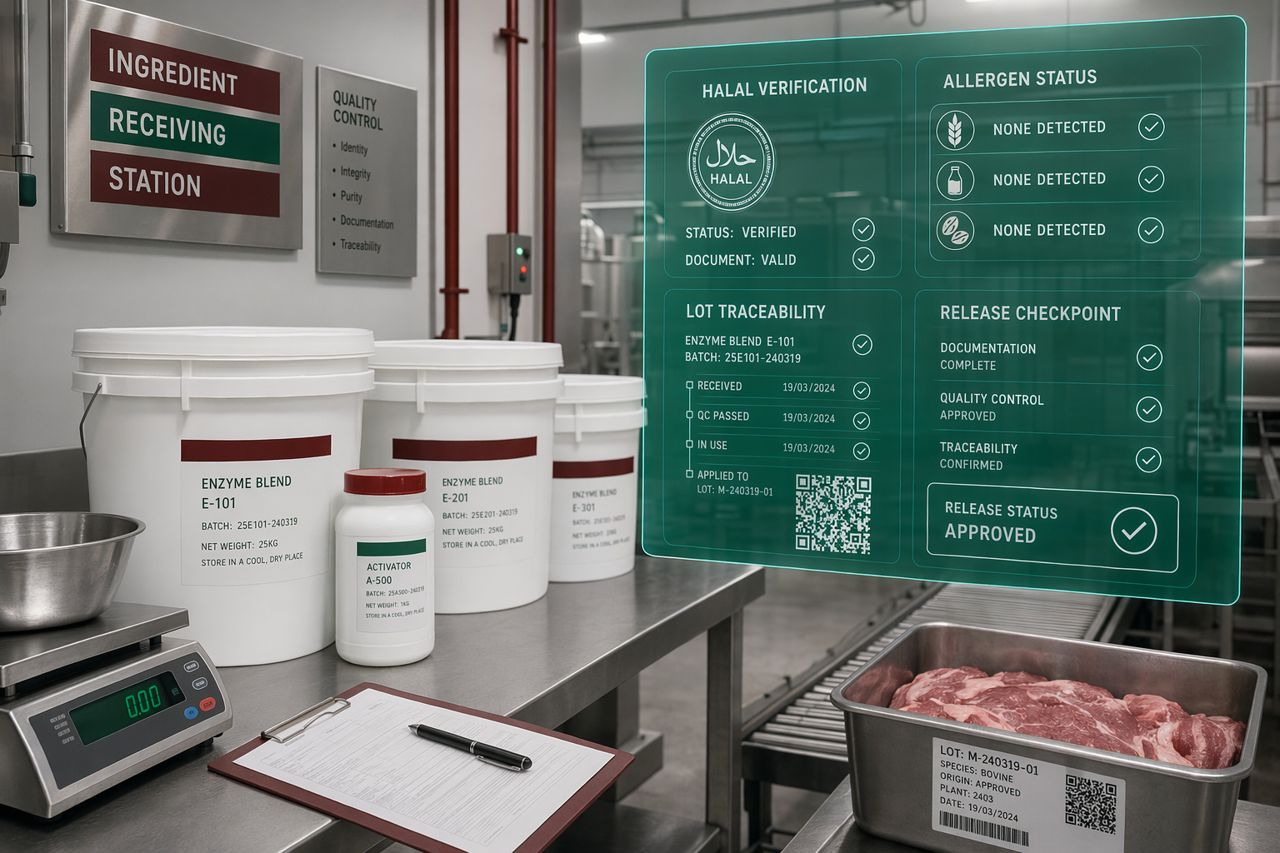
Receiving should confirm product name, supplier, lot code, seal condition, halal documentation status, and allergen classification before release. Storage locations should prevent mix-ups between allergen-containing and allergen-free ingredients, as well as between halal-approved and non-approved materials.
Visual controls can help: color-coded tags, dedicated shelves, quarantine status labels, and system blocks that prevent unapproved lots from being issued to production.
4. Weigh-up and dosing discipline
Small-quantity ingredients can create large compliance problems. Enzyme powders, concentrates, or blends should be controlled through approved utensils, closed containers, clear batch sheets, and verified addition points.
Where possible, use:
- Dedicated scoops or single-use liners
- Controlled weigh-up rooms
- Pre-labeled batch kits
- QA release checks before production issue
- Documented reconciliation of unused material
These steps reduce the chance of both allergen cross-contact and formulation error.
5. Cleaning validation and line clearance
Cleaning expectations should reflect the specific ingredient risk. A non-allergen enzyme system may still require control to prevent carryover into products where it is not intended. If the enzyme blend contains or is processed with allergen-bearing materials, the cleaning program must address that risk directly.
Line clearance should verify that prior batch materials, labels, utensils, ingredient containers, and rework are removed or dispositioned before the next halal production run.
Plant trials should prove control, not just texture
A plant trial is the right time to evaluate more than yield or tenderness. QA should use the trial to test the full implementation pathway:
- Can the ingredient be received and released without exception?
- Are operators able to identify the correct lot and dosing instruction?
- Does the ingredient disperse consistently under normal plant conditions?
- Are hold times and processing steps practical for production?
- Does the process maintain target texture, yield, and sensory profile?
- Are cleaning and line-clearance steps realistic between products?
- Does the documentation satisfy internal halal, customer, and audit requirements?
This approach protects the plant from approving an ingredient that performs in isolation but fails under operating conditions.
Residue and carryover control in halal meat production
Residue control matters in two ways. First, unintended carryover can affect product quality, including texture variability or over-tenderization. Second, residue can create allergen, halal, or customer-specification exposure if the ingredient is not intended for the next product.
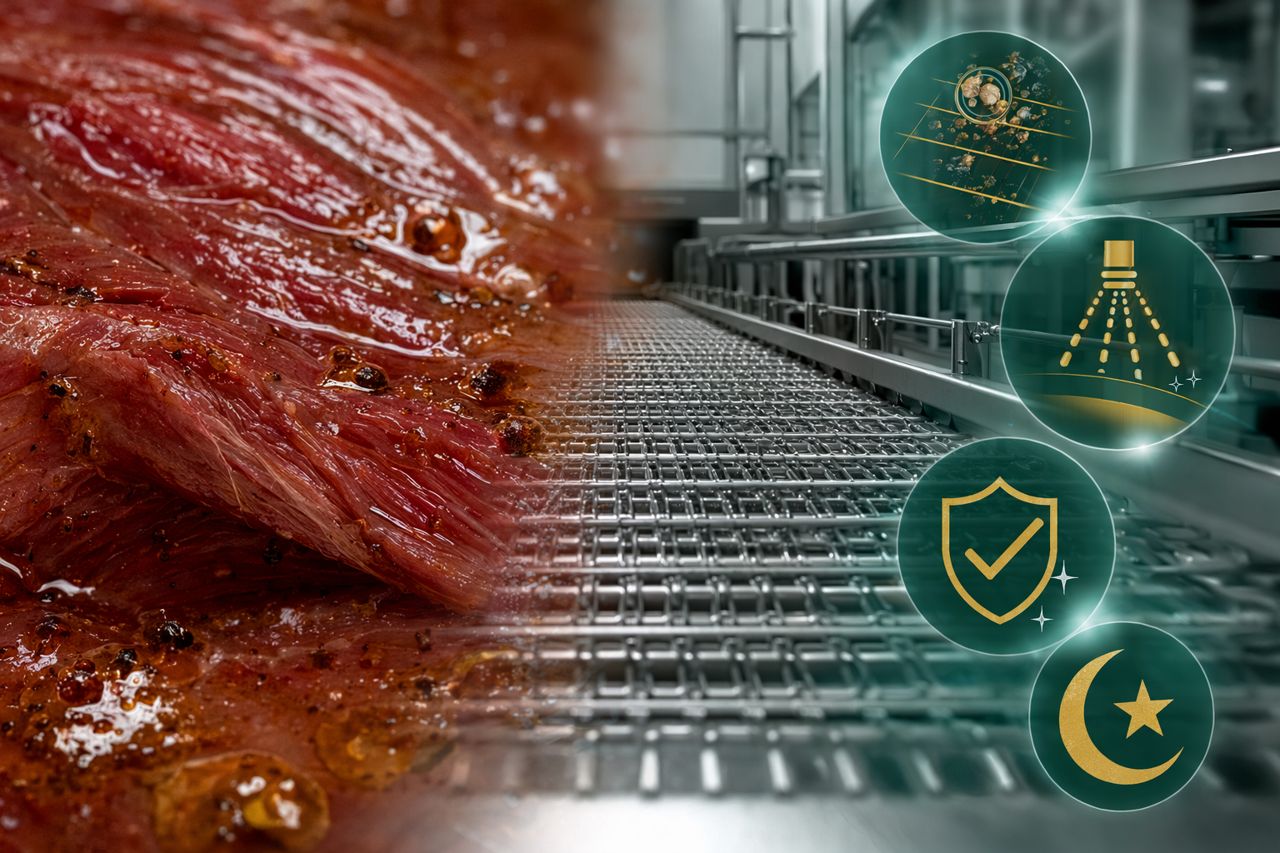
Processors should define where enzyme residue risk is most likely: mixing tanks, injection equipment, tumblers, conveyors, drain points, hoses, valves, and manual utensils. Control measures may include equipment sequencing, dedicated parts, verified cleaning steps, documented pre-op checks, and restricted rework routing.
A supplier that understands plant realities can help QA review the process map before the trial, not after a deviation.
Documentation that helps during audits
For halal meat processors, audit readiness depends on document quality and version control. Ingredient approvals should not rely on informal emails or incomplete declarations.
A practical enzyme supplier documentation pack may include:
- Current halal certificate or halal suitability documentation
- Product specification
- Allergen statement
- Ingredient origin statement
- Non-porcine assurance where applicable
- Certificate of analysis by lot
- Safety data documentation
- Storage and handling guidance
- Change-notification commitment
- Traceability and lot identification guidance
The strongest documentation is clear enough for QA, purchasing, R&D, production, and customer-facing technical teams to use consistently.
What QA should ask before approving a new enzyme system
Before approving a new enzyme ingredient or blend, ask these questions:
- Does the supplier understand halal meat processing, or only general food ingredients?
- Can they provide documentation before the plant trial?
- Are allergen and halal declarations specific to the supplied product, not generic category statements?
- Is the enzyme system compatible with your brine, marinade, tumble, injection, or thermal process?
- Can the supplier support controlled trial design and post-trial review?
- Is change notification written, time-bound, and commercially enforceable?
- Can the product be supplied reliably at production scale?
The right answer should reduce uncertainty for QA and improve confidence for operations.
Amanah Catalytics approach
Amanah Catalytics supplies enzyme solutions for halal meat processors with a focus on documentation readiness, traceable supply, residue-conscious implementation, and plant-trial support. Our work is designed for QA managers who need controlled introduction, not speculative claims.
We support processors evaluating enzyme systems for tenderness, texture consistency, process efficiency, and yield stability while maintaining halal assurance and cross-contact discipline.
Request a quote
If your team is reviewing a new enzyme system for halal meat production, share your application, ingredient constraints, halal documentation needs, allergen requirements, and trial timeline.
Request a quote through the on-site contact form and Amanah Catalytics will respond with a technical supply pathway aligned to your plant controls.